
At 10:17 on a Tuesday morning, the six-person meeting room is occupied by one person wearing headphones. Ten minutes later, two colleagues are walking the floor looking for somewhere private to talk. By noon, the conversation has already moved to renovation: add another room, move a wall, split the boardroom.
This is how a meeting-room shortage often gets diagnosed: there are not enough rooms. But if larger rooms are routinely being used for solo video calls, interviews, one-on-ones, and confidential conversations, the office may be short on something else: smaller enclosed spaces that better match how people actually work.
That is worth figuring out before anyone starts moving walls.
Your calendar is workplace data
A full booking calendar tells you that people want enclosed space. It does not tell you why. A large room regularly filled by a large group is doing exactly what it was designed to do. The same room repeatedly occupied by one person is telling you something different about how your team prefers to work.
So instead of counting bookings, look at what is happening inside them.
of meetings involve just 1–3 people.
Large conference rooms account for nearly 60% of meeting space.
Source: Steelcase workplace research, 2026.
Run a one-week room audit
Before changing the floor plan, spend five working days tracking four things:
- Headcount — How many people actually use the room?
- Activity — Team meeting, video call, interview, one-on-one, or focused work?
- Reason for enclosure — Privacy, quiet, confidentiality, a screen, or collaboration?
- Timing — Is demand constant or concentrated on particular days and hours?
A simple spreadsheet and a few checks during the day are enough to reveal useful patterns.
- If larger rooms are regularly full of larger groups, you may genuinely need more meeting capacity.
- If six seats repeatedly serve one or two people, the opportunity may be a better mix of room sizes.
- If availability disappears only on peak office days, the issue may be timing rather than the total number of rooms.
That is much more useful information than “our rooms are always busy.”
Make the smallest change that fits the pattern
Once the pattern is clear, the options become easier to compare.
Dividing one six-person room into two smaller rooms creates more enclosed spaces, but removes the room that can seat six. Building another permanent room adds capacity, but commits that part of the floor plan to the same use for years.
Neither is inherently right or wrong.
Permanent changes make the most sense when the need itself is stable. For growing companies, that matters: teams expand, hiring comes in waves, and hybrid attendance can make Tuesday feel crowded while Friday feels half-empty.
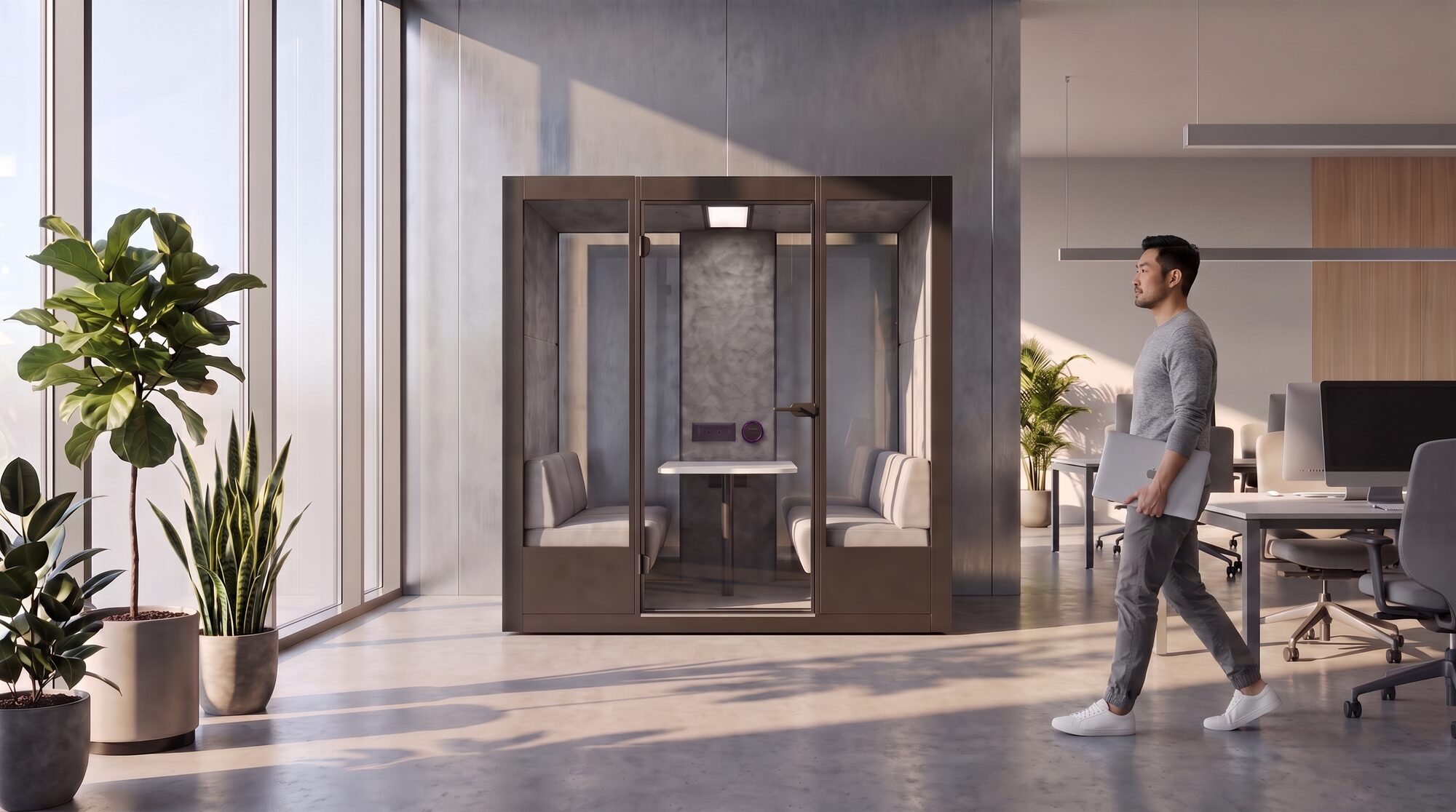
Sometimes the better answer is to protect larger meeting rooms and introduce another scale of enclosed space for the work that does not need six seats.
Privacy is its own workplace need
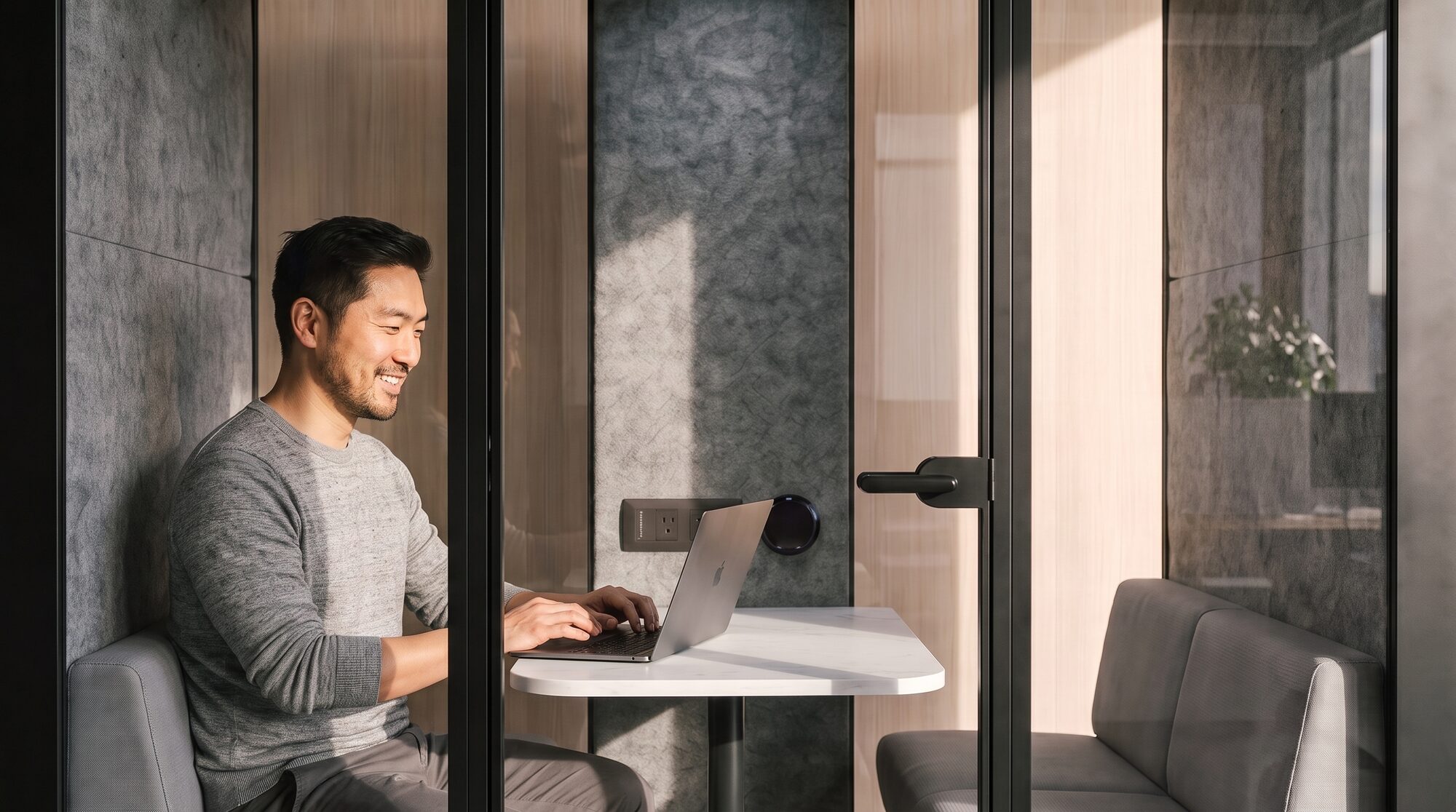
Not every search for a room is really about having a meeting. Sometimes people simply need somewhere they can speak normally without broadcasting the conversation to everyone around them.
of office workers prefer private spaces for individual deep-focus work.
of employees say they cannot get privacy when they need it.
Source: Gensler Research Institute, 2023.
Source: Steelcase Global Employee Research, December 2025.
That does not mean turning the office into a collection of closed rooms. The useful idea is variety: different levels of enclosure for different moments in the working day. A team workshop, a confidential one-on-one, and a ten-minute video call all need something different from the office. Giving them the same room by default is often what creates the pressure in the first place.
Let the office tell you what to change next
Before changing the floor plan, spend a week watching how enclosed spaces are actually used.
The pattern will usually tell you whether you need more meeting capacity, a different mix of room sizes, or simply another scale of privacy.
A good workplace does not need the maximum number of rooms. It needs the right range of places for the work people actually do.